
Fencing Mesh: The Comprehensive Guide
For types, prices and installation

What is fencing mesh?
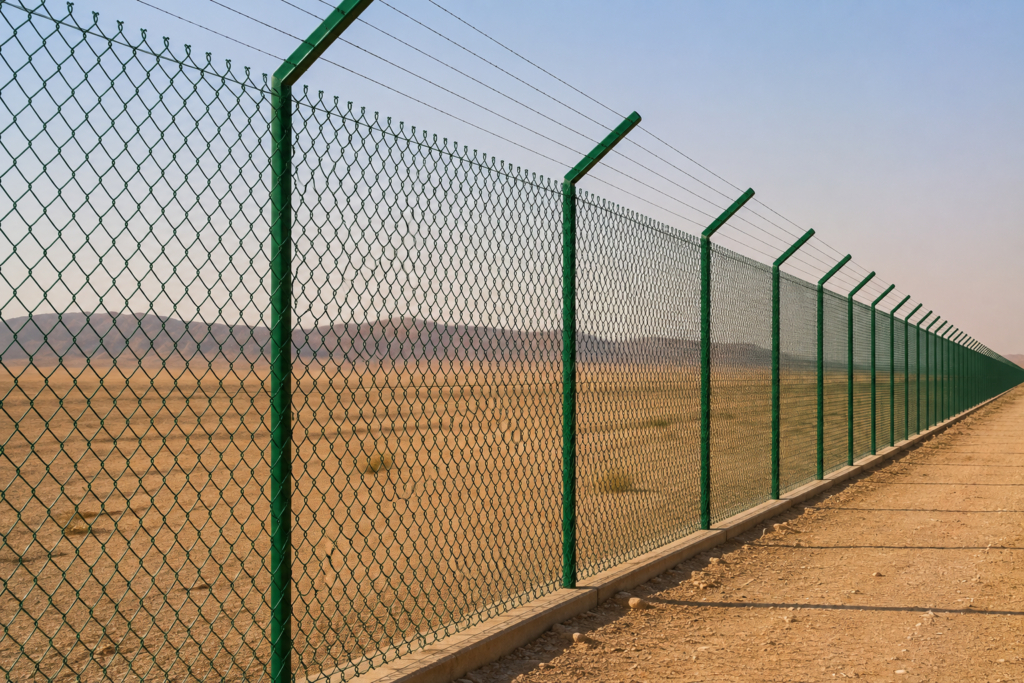
Wire fencing is a type of metal fence made from iron wires woven into a mesh pattern; it is used to define boundaries and provide security and protection for homes, gardens, farms, and industrial or commercial facilities. Characterized by its strength, durability, and ease of installation, it is a popular choice in Saudi Arabia and beyond.
Fencing mesh components
Metal wire: The base material used to manufacture the mesh; it is available in various types, such as galvanized, steel, and plastic-coated.
Posts: Vertical structures fixed in the ground to support the netting; they are typically made of iron or galvanized steel.
Gates and accessories: Added to provide safe entry and exit points.
From 0.5 meters to 4 meters
height
From 2 mm to 4.5 mm
Mesh opening
From 25 mm to 70 mm
Mesh opening
From 15 meters to 25 meters
Roll length
How does fencing mesh work?
Fencing mesh acts as a physical barrier that prevents unauthorized access while providing clear visibility of the surrounding areas. It can be easily installed on the ground or atop existing walls, offering a flexible, cost-effective solution for securing both open and enclosed spaces.
Fencing mesh is the preferred choice for government and industrial projects in Saudi Arabia, thanks to its durability and suitability for local requirements.
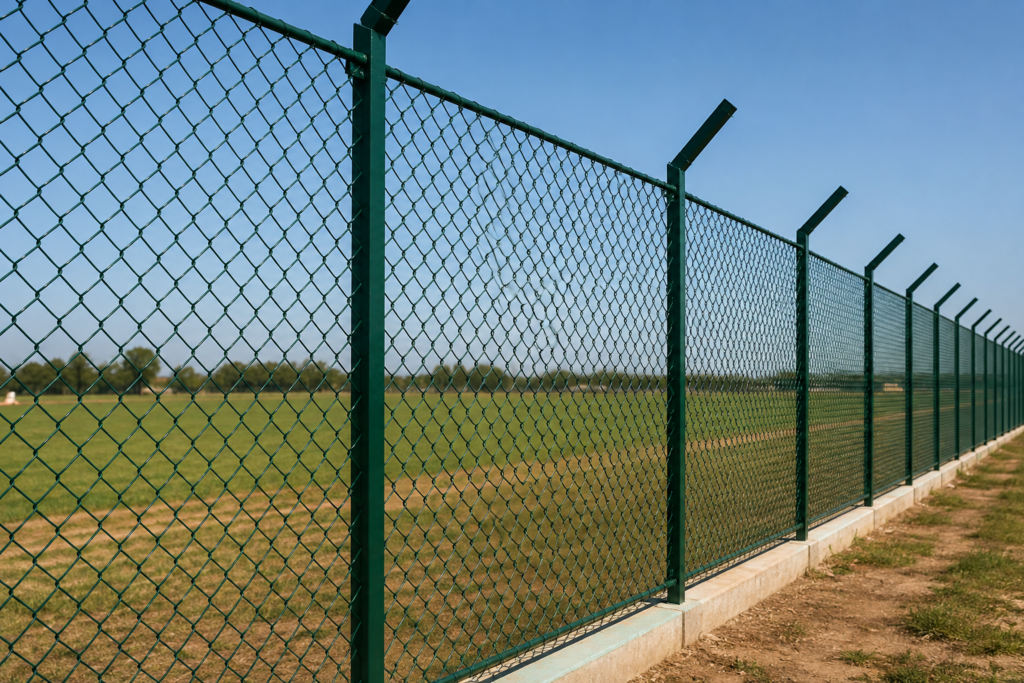
Types of Fencing Mesh (by Material)
Fencing mesh is classified into several types based on the material from which it is made, each with its own advantages and suitable applications:
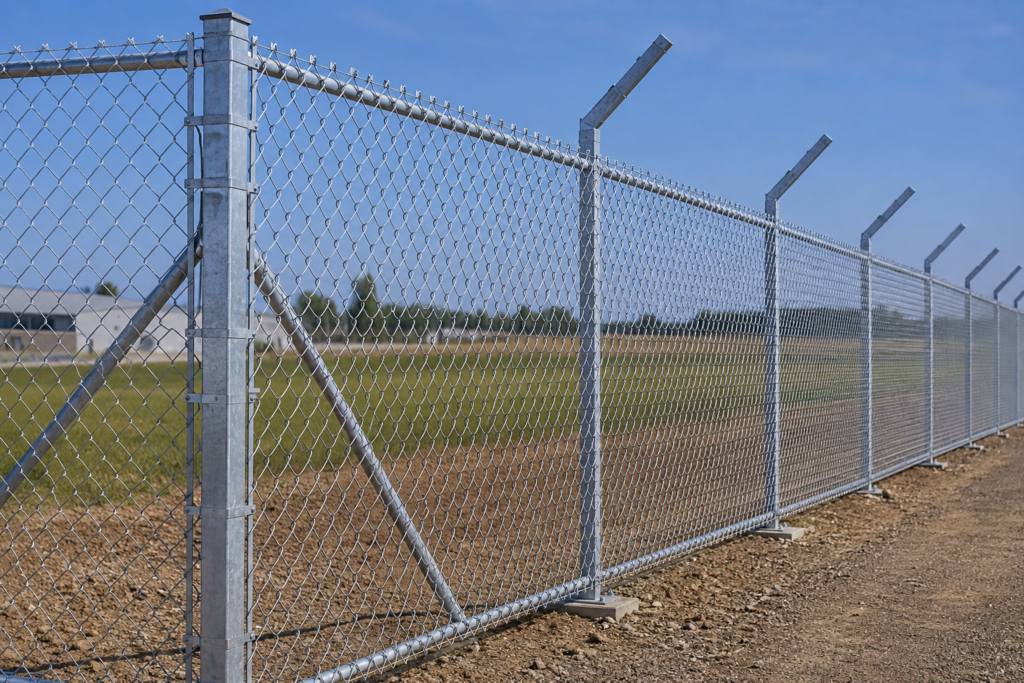
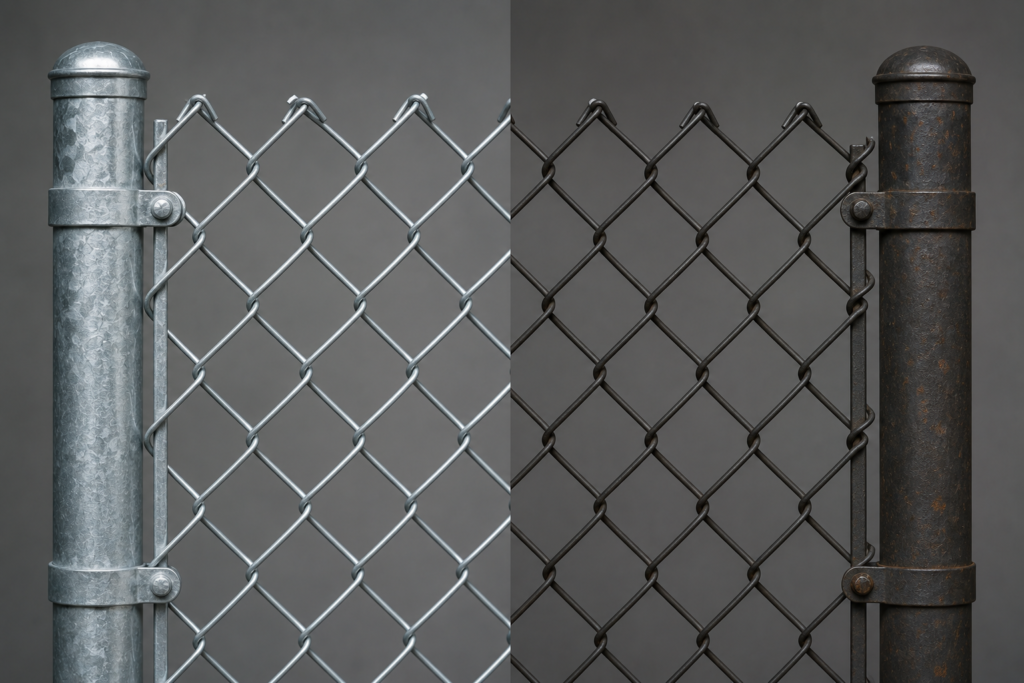
Galvanized fencing mesh (galvanized wire)
Galvanized fencing mesh is the most common type in the Saudi market, distinguished by a zinc coating that protects the wire against rust and corrosion. It is used in humid environments and outdoor projects that require high durability and a long service life.
- Features: High rust resistance, long lifespan, competitive price.
- Uses: Gardens, farms, factories, government projects.
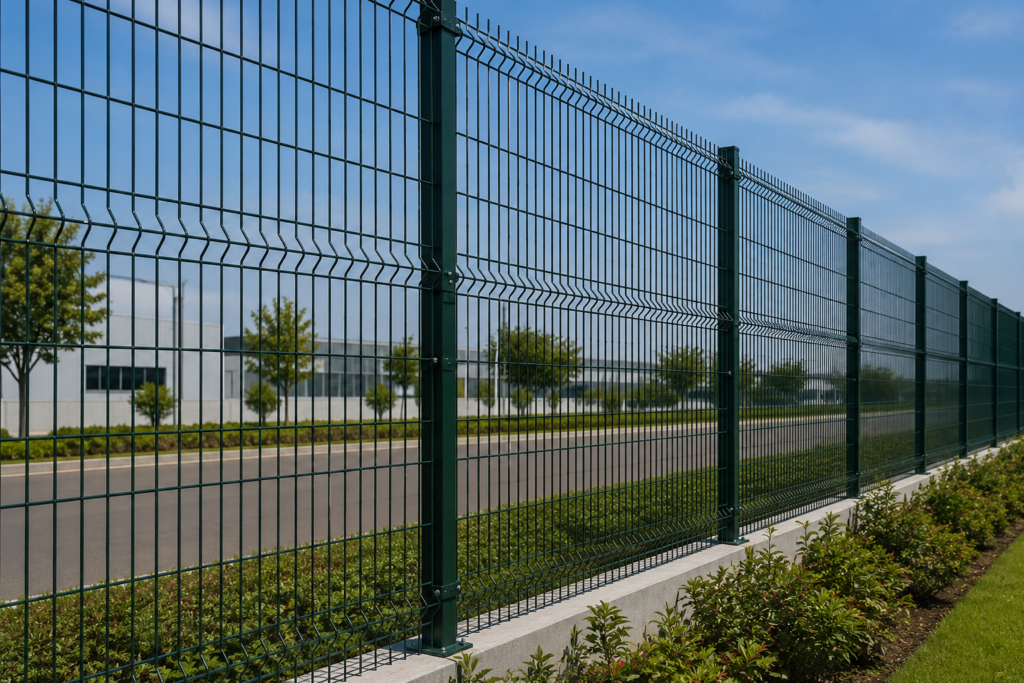
Rigid fencing mesh (rigid wire)
Steel fencing mesh is made from non-galvanized steel wire and is characterized by high strength and superior durability. It is used in applications requiring high resistance to impact and pressure.
- Features: High tensile strength, suitable for heavy-duty applications.
- Uses: Factories, warehouses, industrial facilities, stadiums.
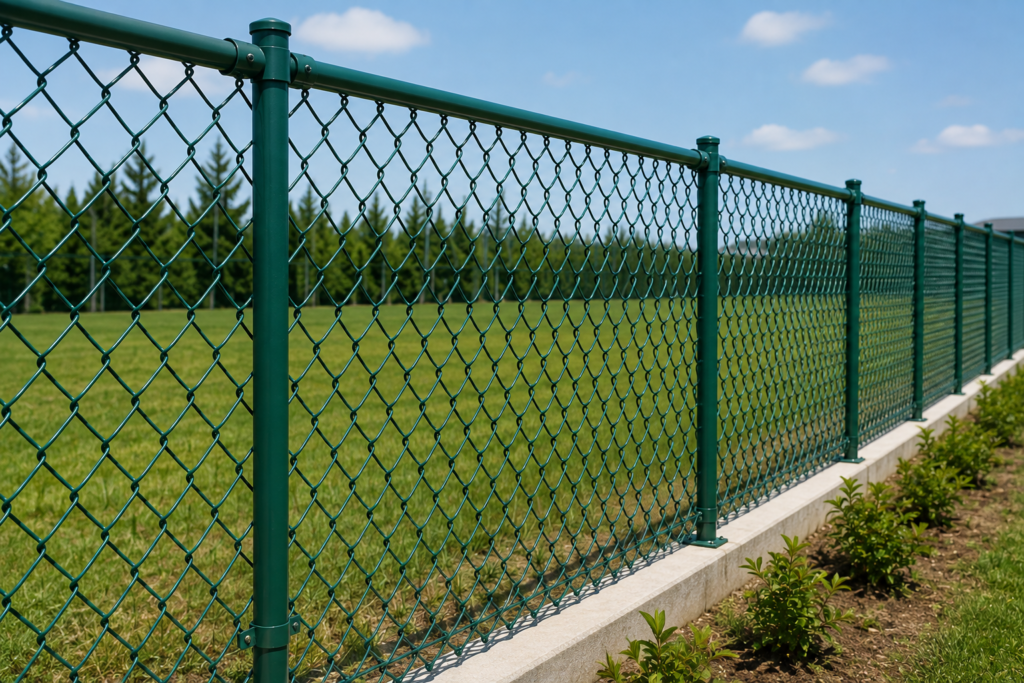
Plastic fencing mesh (PVC-coated)
Plastic-coated fencing mesh offers enhanced weather protection and an aesthetic appeal with a variety of color options. It is used in residential and commercial projects that require a stylish appearance.
- Features: High rust resistance, diverse colors, aesthetic appearance.
- Uses: Home gardens, residential complexes, hotels, and parks.
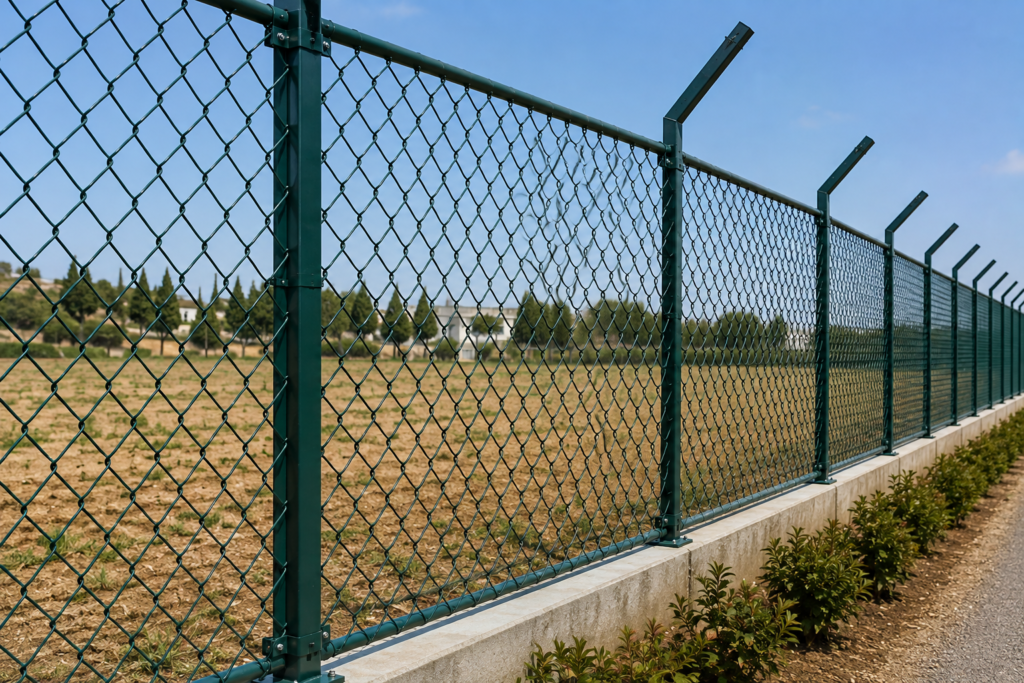
Diamond-patterned fencing mesh
Baklava mesh is a type of mesh featuring small openings and made from fine wires; it is typically used in applications that require ventilation while obscuring visibility.
- Features: Lightweight, good ventilation, economical price.
- Uses: Windows, temporary fences, crop protection.
Types of Fencing Mesh (by Use)
The choice of fencing mesh varies depending on the intended use; the following are the most prominent applications:
Fencing mesh for gardens and homes
Fencing mesh is used in home gardens to define areas and ensure the safety of children and pets. Galvanized or plastic-coated mesh is preferred for its durability and aesthetic appeal.
Farm fencing mesh
On farms, fencing mesh is used to protect crops and livestock from predators and to demarcate agricultural land boundaries. Galvanized mesh is preferred due to its rust resistance in humid environments.
Sports field fencing mesh
Fencing mesh is used in sports facilities to secure stands and playing areas, and to prevent balls from escaping. The mesh used in these venues is characterized by its high strength and appropriate height.
Fencing mesh for factories
In factories and industrial facilities, fencing mesh is used to secure the perimeter and separate different areas. Rigid or galvanized mesh is preferred due to its resistance to harsh industrial conditions.
The Sports Sector
We design and install fencing and sports courts (football pitches, tennis courts) to international standards that ensure the safety of players and spectators.
Gardens and Parks
We add aesthetic appeal and practical protection to public gardens and parks using fences and mesh systems that harmonize with the surrounding environment.
Fencing Mesh Specifications
The quality of fencing mesh depends on several technical specifications that should be considered when purchasing:
The Specification |
Description |
Importance |
|---|---|---|
Mesh sizes
|
Available heights and widths (e.g., 1.5m x 3m, 2m x 4m)
|
It determines the coverage area required.
|
Wire thickness
|
It ranges from 2 mm to 6 mm, depending on the type.
|
It affects durability and strength.
|
Aperture diameters
|
Size of the openings between the wires (e.g., 5×5 cm, 10×10 cm)
|
It affects visibility and safety.
|
Available finishes
|
Hot-dip galvanizing, cold galvanizing, PVC coating, powder coating
|
Determines rust resistance and service life.
|
Technical Details and Engineering Standards
To ensure optimal performance and longevity, here are the key technical specifications you need to know about fencing mesh:
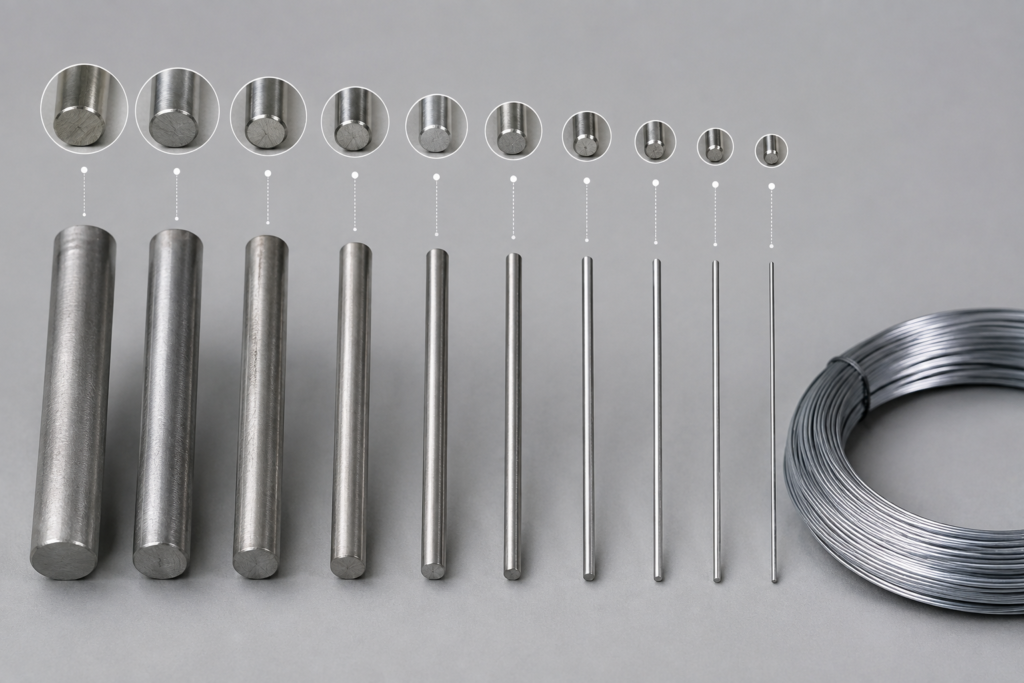
Standard Wire Gauge (BWG) sizes
BWG 8 (4.19 mm) – for heavy-duty, agricultural, and road applications. BWG 10 (3.40 mm) – for general use in gardens and factories.BWG 12 (2.77 مم) – For lightweight fencing and decoration.
BWG 14 (2.03 mm) – for fine mesh and indoor applications.
These sizes can be converted to millimeters using international standard tables.
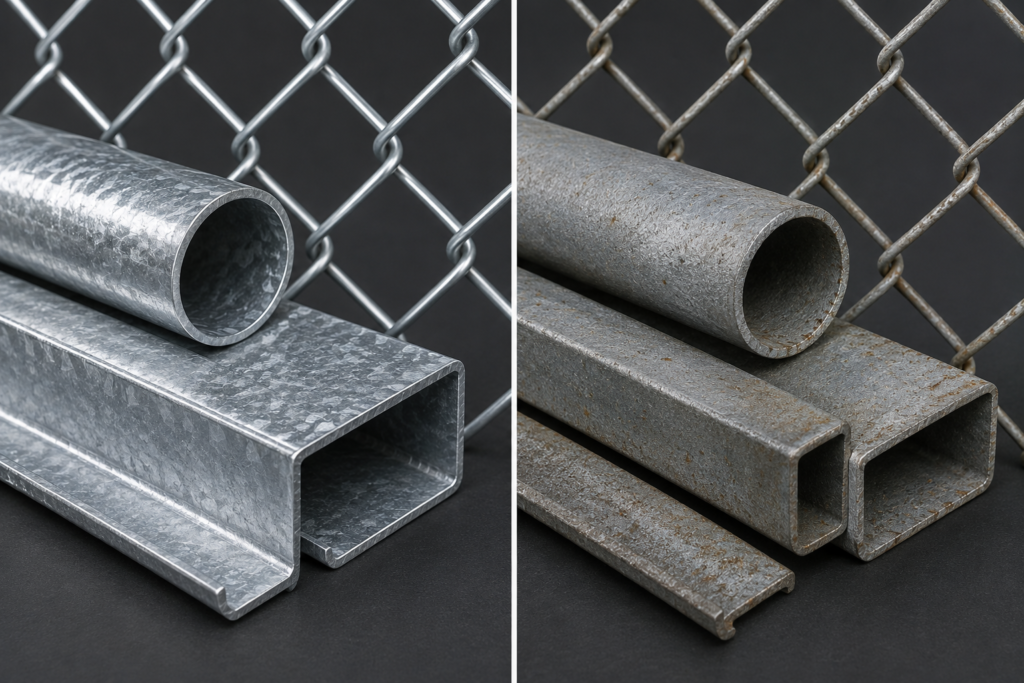
Galvanizing Quality – Hot-Dip vs. Cold
- Hot-dip galvanizing: A thick zinc coating (exceeding 300 g/m²) that provides superior rust protection for decades; suitable for humid and industrial environments.
- Electro-galvanizing (cold galvanizing): A thin zinc layer (10–30 g/m²) offering limited protection; used in dry or indoor environments.
Technical tip: Ask the supplier about the zinc coating weight (g/m²) to ensure the required quality.
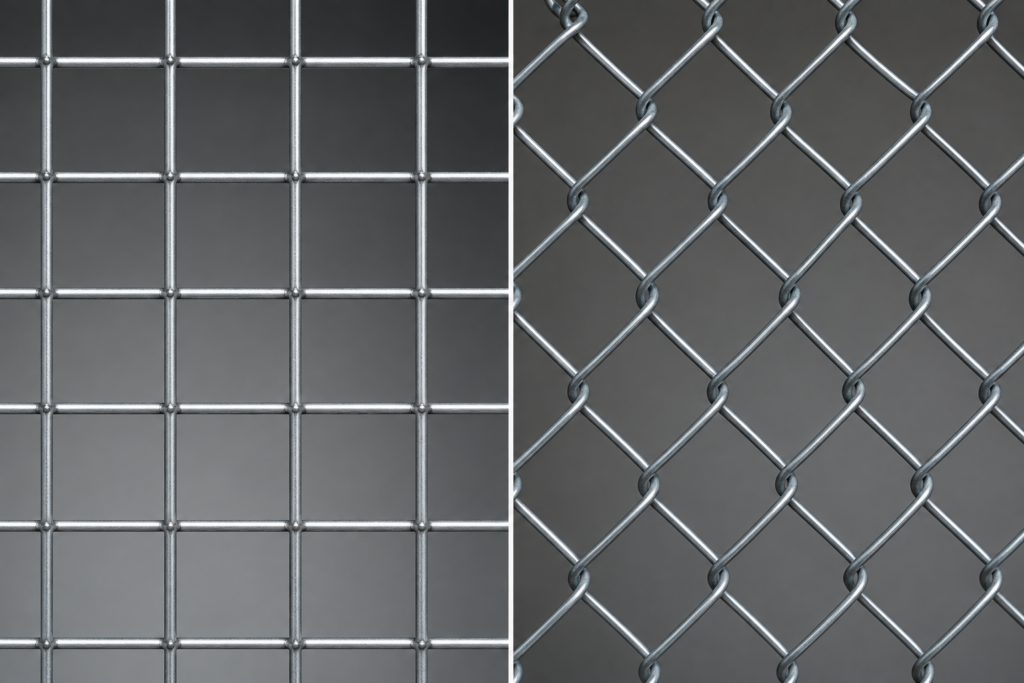
Welded Mesh vs. Chain Link
- Welded: Solid weld points, a rigid mesh that does not sag; ideal for permanent fences, gates, and structures.
- Woven (mesh/diamond-pattern): Flexible and shock-absorbing; easy to install on uneven terrain; used for sports fields, farms, and long-stretch fencing.
Additional Types of Security and Structural Mesh
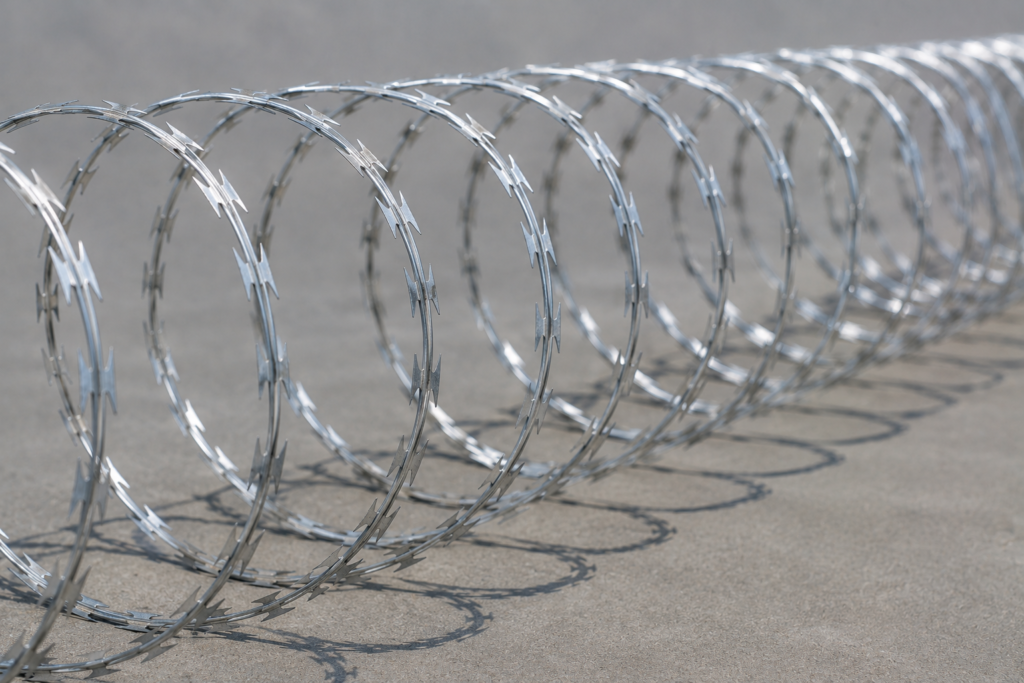
- Concertina/Razor Wire: Helical barbed strips used to secure the tops of fences and sensitive facilities.
- Expanded metal: A mesh made from metal sheets that have been slit and stretched; it is used for flooring and heavy-duty facades.
- Screen Mesh: Fine-gauge mesh used for filters, sieves, and insect protection.
Fencing mesh prices in Saudi Arabia
Fencing mesh prices in Saudi Arabia vary based on the type, material, thickness, and supplier. The table below shows average prices (subject to change depending on market conditions and quantity):
Specification |
Price per meter (Saudi Riyal) |
Price per roll (Saudi Riyal) |
|---|---|---|
Galvanized fencing mesh
|
25 - 40
|
600 - 1200
|
Rigid fencing mesh
|
30 - 50
|
750 - 1500
|
Plastic (PVC) fencing mesh
|
35 - 60
|
900 - 1800
|
Diamond-pattern fencing mesh
|
15 - 25
|
400 - 700
|
Factors Affecting the Price of Fencing Mesh
Raw material: The price of iron and the raw materials used.
Type of finish: Galvanizing or painting increases the cost.
Wire thickness: The greater the thickness, the higher the price.
Order quantity: Large orders receive discounts.
Supplier and manufacturer: Prices vary between manufacturers.
Delivery and installation: additional costs apply depending on the location.
Tip: To get the best price for fencing mesh, it is advisable to compare quotes from several authorized suppliers and request samples to verify the quality before purchasing in bulk.
Calculating the cost of an integrated fencing system
When planning a fencing project, it is not just a matter of purchasing the fencing mesh; it also involves posts, tie wires, concrete, and installation. Below is an estimated cost breakdown for fencing a 100-linear-meter perimeter with a height of 2 meters:
Element |
Approximate quantity |
Estimated Cost (Riyal) |
|---|---|---|
Mesh rolls (10 m long, 2 m high)
|
10 rolls
|
6,000 – 12,000
|
Iron columns (every 3 m, with bases)
|
33 columns
|
3,300 – 6,600
|
Galvanized tension and binding wires
|
As needed
|
500 – 1,000
|
Concrete for securing foundations (bags)
|
≈ 33 bags
|
1,000 – 1,500
|
* These figures are estimates and may vary based on the quality of materials, the supplier, and the location. Please contact our team to receive an accurate price quote.
How to Choose the Right Fencing Mesh
An end-to-end process, from concept to delivery, executed with high engineering precision.
How to Choose the Right Fencing Mesh
Determine whether it is for use in a garden, on a farm, in a factory, or for security purposes.
Surrounding environment
Humid areas require galvanized or coated mesh.
Budget
Setting the right price while balancing quality and cost.
Durability and Lifespan
Choosing the type that offers the longest possible lifespan.
Comparison of Types
Galvanized vs. Steel:
Galvanized steel is better for humid environments, while steel is better for heavy-duty applications.
Galvanized versus plastic: plastic is more expensive, but it offers a better appearance and greater durability against rust. Baklava-style [mesh/grille] versus other types: the baklava-style is lighter and less expensive, but it is less durable.
Tips Before Buying
Request a product sample before purchasing in large quantities.
Check the quality certifications and the standards applied.
Ensure that a warranty and after-sales service are available.
Top Fencing Mesh Suppliers and Manufacturers in Saudi Arabia
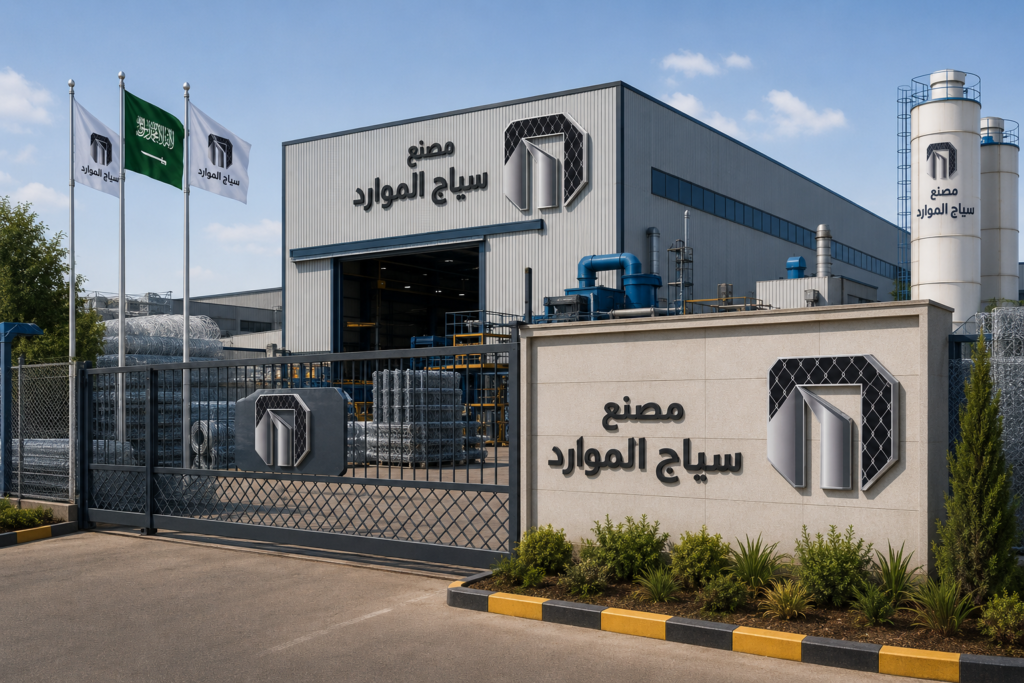
Al-Mawarid Fencing Factory
Sayaj Al-Mawarid Factory is one of the leading manufacturers of fencing mesh in the Kingdom of Saudi Arabia. The factory is distinguished by the high quality of its products—which meet international standards—and its ability to cater to the requirements of both large and small-scale projects. It offers an extensive range of products, including galvanized, steel, and plastic-coated mesh, as well as gates and various accessories.
phone number
+966 53 908 5091
sales@almawaredfence.com
location
Riyadh, Saudi Arabia - Second Industrial Area
Quality Standards and Accreditations
To ensure you get fencing mesh that lasts for years, make sure it meets the following specifications:
Saudi Standards (SASO)
The product complies with local quality and durability standards.
ISO 9001 Certification
It means that the factory implements an internationally recognized quality management system in its production processes.
Hot-dip galvanizing
In accordance with the ASTM A123 standard, to ensure sufficient thickness of the zinc coating (more than 300 g/m²).
Tensile and Elasticity Tests
To ensure the mesh is capable of withstanding pressure and harsh weather conditions.
Frequently Asked Questions
Answers to the most frequently asked questions about manufacturing, supply, and products
What is fencing mesh?
Wire fencing is a type of metal barrier made from woven iron wires; it is used to define boundaries and provide security for homes, gardens, farms, and facilities.
What are the types of fencing mesh based on the material?
Galvanized fencing mesh, steel mesh, plastic-coated (PVC) mesh, and diamond-pattern mesh.
What is the price per meter for fencing mesh in Saudi Arabia?
The price for a meter of fencing mesh ranges from 25 to 60 Saudi Riyals, depending on the type and thickness; an accurate price quote can be obtained from the supplier.
What is the best type of fencing mesh?
The best type depends on the intended use: galvanized for humid environments, steel for heavy-duty applications, and plastic-coated for aesthetic appeal and superior rust resistance.
How is fencing mesh installed?
Installing a wire fence involves site planning, excavating foundations, erecting posts, stretching and securing the mesh, and finally installing gates. It is recommended to seek the assistance of a qualified technician.
What are the best fencing mesh manufacturers in Saudi Arabia?
Among the most prominent factories are: Siyaj Al-Mawarid Factory, Arab Metal Industries Factory, and Gulf Steel Industries Factory.
How many years does fencing mesh last?
The expected lifespan of fencing mesh ranges from 15 to 25 years, depending on the quality of manufacturing, the type of material, and the level of maintenance.
Does fencing mesh require maintenance?
Yes, fencing mesh requires periodic maintenance—including inspection, cleaning, and repainting when necessary—to extend its lifespan.